
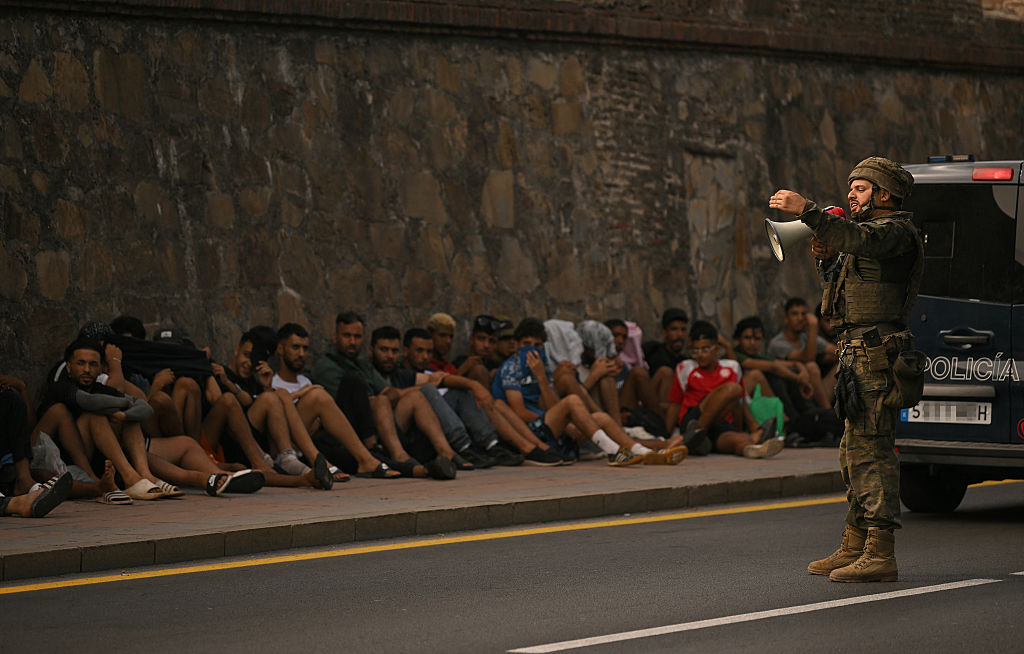
European leaders scrambled Saturday to contain the political fallout from a mass migration surge into Spain’s North African enclave of Ceuta, where authorities say roughly 50,000 people crossed from Morocco in an unprecedented two-day rush that left at least 67 people dead.
Read more Police publicly release ransom notes in Nancy Guthrie disappearance case
Spanish officials said crossings largely stopped overnight after Morocco increased enforcement and thousands of migrants voluntarily returned. Spain also began installing a 500-meter floating barrier off Ceuta’s coastline while deploying additional police and military personnel to prevent further crossings.
The humanitarian crisis has quickly become a political one. Italy temporarily reinstated border controls with Spain for one month, while 22 European Union member states called for an emergency discussion on strengthening the bloc’s external borders. Spanish Prime Minister Pedro Sánchez criticized calls to isolate Spain, arguing the country’s border controls remain intact and warning against measures that could undermine European unity.
Ceuta, along with the nearby Spanish enclave of Melilla, forms the European Union’s only land border with Africa, making it a longstanding flashpoint in debates over migration. While Spain has introduced a pathway to legal residency for some undocumented immigrants already living in the country, officials rejected claims that the policy triggered the latest crossings, instead blaming migrant-smuggling networks and misinformation circulating on social media.
Read more DOJ reverses charges in Reflecting Pool vandalism case
Reuters reported that many migrants who reached Ceuta have already returned to Morocco after encountering overcrowding, food shortages and little prospect of continuing onward into mainland Europe. Spanish officials said migrants who enter Ceuta cannot freely travel into the rest of Spain because identity checks remain in place before any ferry or air travel to the mainland.
President Donald Trump seized on the crisis Saturday, posting on Truth Social that the scenes in Spain resembled what he claimed occurred under former President Joe Biden and warning that the United States would face an even larger “invasion” if Democrats return to power. Similar claims have circulated widely online, though Spanish officials dispute comparisons to U.S. immigration policy and say the circumstances surrounding the Ceuta crossings are unique to the enclave’s geography and legal status.
Read more “Diarra From Detroit” shows what a media merger could cost TV