
Education Secretary Linda McMahon praised the growing use of artificial intelligence in classrooms Sunday, even as she acknowledged there is little evidence yet showing how the technology affects student learning.
Read more Sean Duffy’s Great American Road Grift
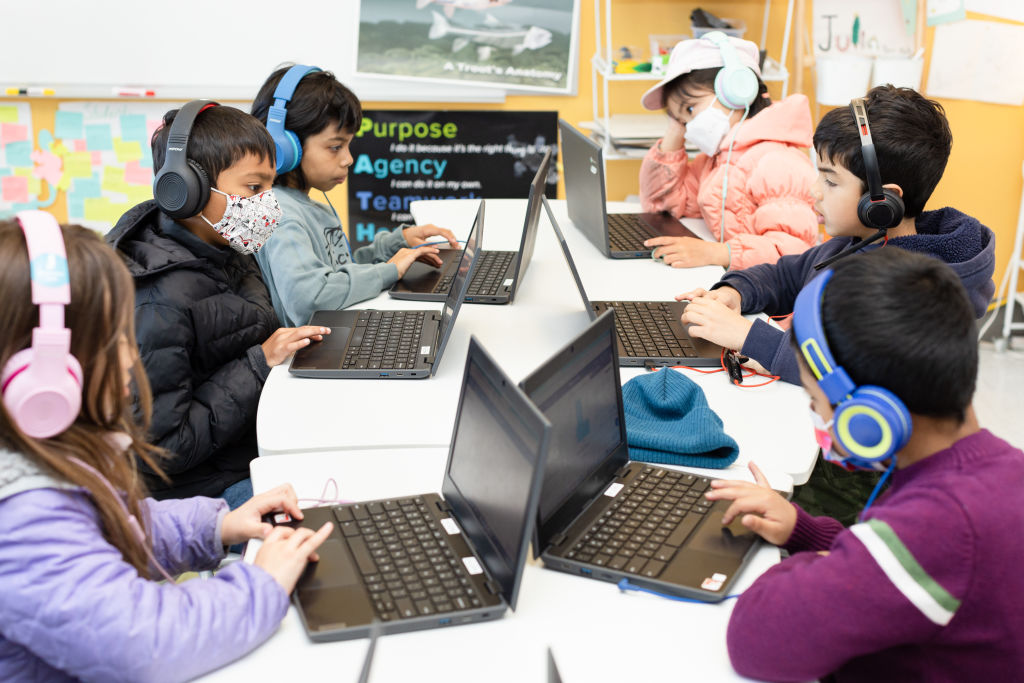
During an interview with CNN’s Dana Bash, McMahon pointed to Alpha School in Austin, Texas, where students spend the first two hours of their school day wearing headphones and learning in front of computers with teachers monitoring their progress.
“The beauty of that is that a student almost has a one-on-one tutor,” McMahon said, explaining that AI programs can adjust instruction based on how quickly individual students are learning.
Her comments come just days after the Education Department issued new guidance telling schools to evaluate educational technology based on evidence that it improves student outcomes.
But when Bash noted that generative AI is too new for comprehensive long-term studies and asked whether students were effectively becoming “guinea pigs for chatbots,” McMahon acknowledged the evidence is still developing.
“There aren’t a lot of metrics available now,” McMahon said.
Still, she praised what she witnessed at the Austin school. “Oh, it’s working wonderfully and they’ve been doing it now for a few years,” she said.
Schools across the country are already wrestling with how much artificial intelligence belongs in education.
Read more What if the fascists win in Germany?
Thirty-seven states have issued guidance on AI in schools while districts that initially focused on preventing students from using chatbots to cheat are increasingly introducing AI literacy programs designed to teach students both how to use the technology and recognize its limitations.
Those limitations can be significant. During a recent AI training session for educators in South Carolina, an AI-generated world map misspelled Mali as “Mail,” labeled Egypt “Sopth” and replaced Libya with a country simply called “Africa.”
McMahon said schools should monitor whether AI tools actually improve student outcomes and remove those that don’t. She also emphasized that AI should not replace human teachers.
“Nothing should replace that one-on-one teacher interaction with students,” McMahon said, calling for “AI with guardrails.”
The question facing schools may increasingly be where those guardrails should go. McMahon said parents should be able to object when they believe AI isn’t helping their children, while acknowledging schools are still learning what effective AI education looks like.
“It’s how effective are the teachers being able to interact with the students and work with them,” she said. “Students need to be able to communicate with each other.”
Read more The internet is losing its third places