
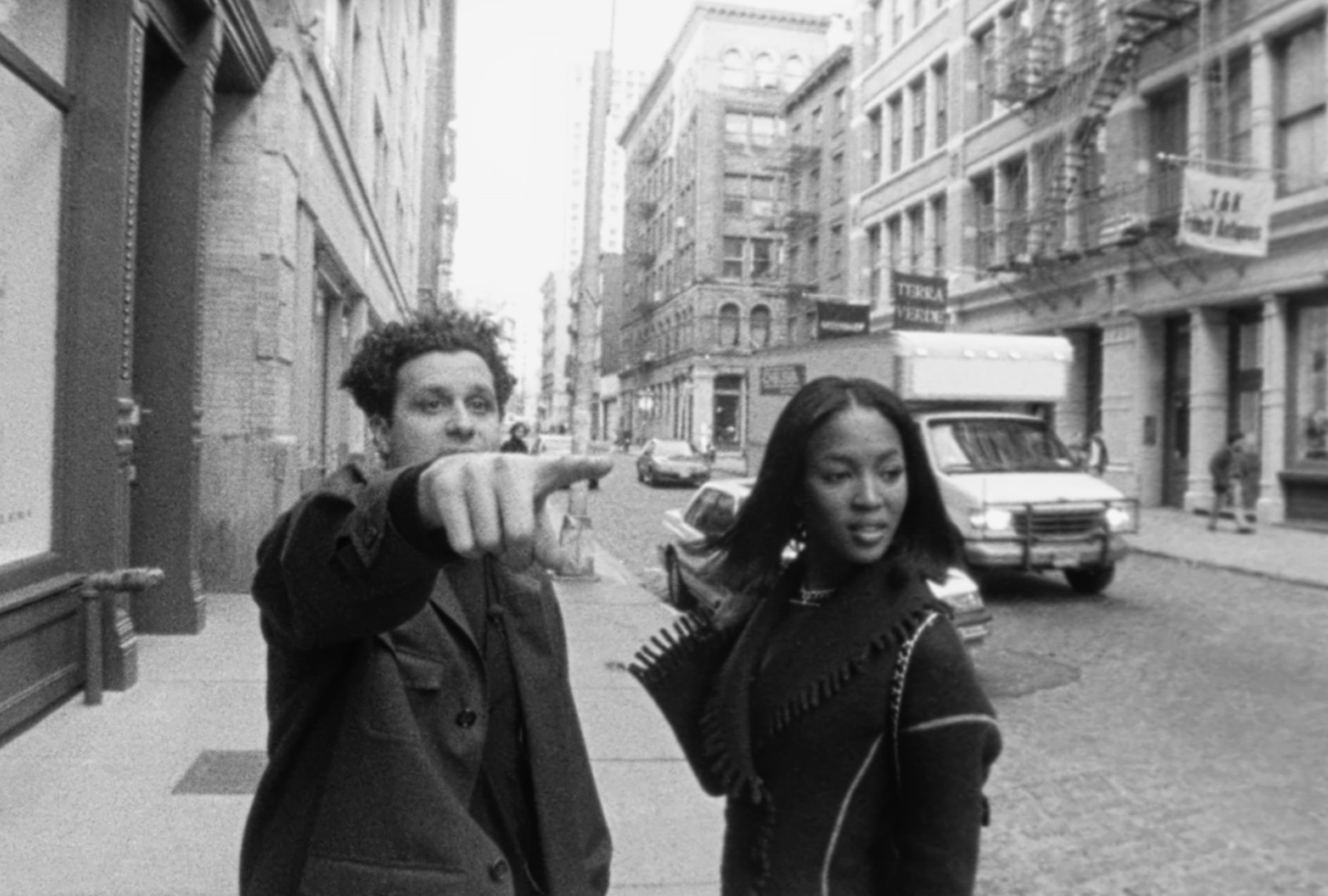
On a cold November morning, designer Isaac Mizrahi gets up, leaves his apartment, and trudges to the corner newsstand to pick up a copy of Women’s Wear Daily. It’s the day after Mizrahi’s Spring/Summer 1994 show, and the ink on the reviews is still wet. Reading from the pages, he quotes, “‘His usually great color sense failed him, his fabric sense failed him, and certainly, his sense of how a modern woman dresses after 8 p.m. failed him.” The verdict is withering. Mizrahi, one of the great artists of ’90s ready-to-wear fashion, has been tossed out. Disgraced. Lightly “cancelled,” as some might call it these days.
Read more Strip clubs, closet duty and Trump’s former Labor Secretary
Douglas Keeve’s sublime 1995 documentary, “Unzipped,” follows Mizrahi in the aftermath of a train wreck, piecing his reputation back together with his next collection, attempting to make something beautiful from the rubble. We find Mizrahi’s world in grayscale, drained of color in the wake of critical and cultural failure. Then, the opening notes of Sandra Bernhard’s 1994 cover of Sylvester’s “You Make Me Feel (Mighty Real)” cue the pigmentation, cascading over bright images of models in fittings, garments hanging from racks, and plenty of DayGlo faux furs. In her version, Bernhard alters the lyrics to pay tribute to Sylvester, whose untimely death left an immense legacy. “Sylvester, sister,” Bernhard coos, “You were so beautiful, you were so fragile, you were so . . . real.”
But just before Bernhard finishes the word, the song fades to silence, as if to say that realness — genuine authenticity in your life and work, at the cost of criticism — will always be snuffed out before it can be fully appreciated. That is the price of beauty. What is up must always come down.
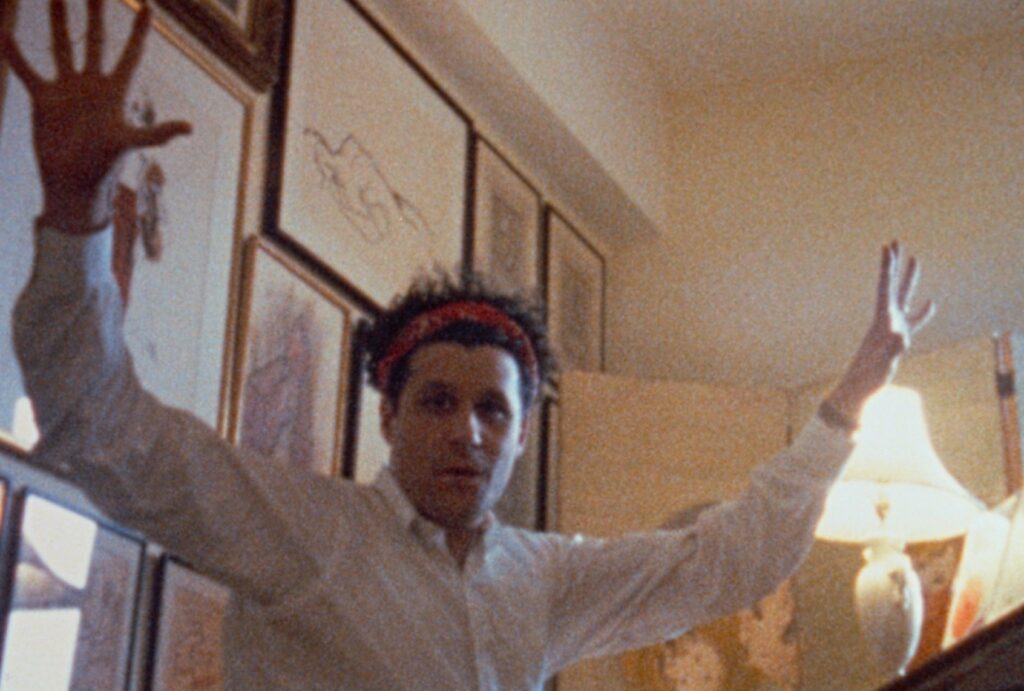
(Janus Films) Isaac Mizrahi in “Unzipped”
Shouldn’t a museum, of all places, be where complex dialogues about art and humanity can prosper? And why do we, as a culture, continually stand in the way of our own edification? As “Unzipped” posits, real authenticity comes at a cost — but it’s the rest of us who are paying the price.
After years in cinematic obscurity — the film hasn’t been readily available outside of the eBay market in decades — “Unzipped” will return to theaters later this month, with a loving 4K restoration from Janus Films, just as another fashion-world controversy is heating up. Earlier this week, the Metropolitan Museum of Art declared it would no longer proceed with its Costume Institute’s upcoming exhibition honoring John Galliano, scheduled to debut next year. When the scrapped “John Galliano: Horizons” was announced in July, the exhibition was immediately met with an outpouring of criticism. Detractors accused the museum of being tone deaf, citing a 2011 video of Galliano going on a drunken antisemitic and racist rant at a Paris bar, for which Galliano was promptly ousted from his spot as creative director at Dior. Following the video surfacing, Galliano apologized, went to rehab, and, over the last few years, experienced a brand resurgence that some would call a whitewashing.
Though the exhibition intended to grapple with Galliano’s fall from grace and create a necessary dialogue about the limitations of artistic reverence, the dissent was too strong. Alongside the cancellation announcement, Galliano expressed further contrition. “I remain fully accountable for the pain caused by my words in the past, particularly the hurt I caused to the Jewish and Asian communities, and I remain deeply sorry for it,” Galliano said. “I understand that meaningful atonement is not achieved through an exhibition . . . It is a continuing responsibility, demonstrated through listening, learning and one’s conduct over time.”
And while Met trustee Anna Wintour stated that the cancellation was “the right decision,” a film so bold and singular as “Unzipped” argues otherwise. The Mizrahi in the documentary is both colorful and off-color, developing a line inspired by Inuit clothing and tossing around well-meaning but derogatory descriptions of the people and their culture until a model corrects him.
Given that the entire film revolves around the collection’s progress and ensuing runway show, and Mizrahi’s much more recent support for Israel amid the Gaza genocide, “Unzipped” raises critical questions about how we perceive art in the context of complicated histories.
Should the film’s upcoming theatrical run also be called off? Can a repugnant act really dull the exquisite beauty of art, and if so, can that beauty return if the artist demonstrates remorse? Shouldn’t a museum, of all places, be a place where complex dialogues about art and humanity can prosper? And, perhaps most importantly, why do we, as a culture, continually stand in the way of our own edification, removing the possibility to understand each other better under the guise of progress? As “Unzipped” posits, real authenticity comes at a cost — but it’s the rest of us who are paying the price.
Watching “Unzipped” together ahead of this piece, my friend remarked that the film is “so fabulous it’s mournful to watch.” There’s no more fitting description of a documentary that’s cobbled together from the dying gasps of ’90s fashion culture, when glamor and mischief reigned supreme. Mizrahi was, at one time, one of the foremost purveyors of these frolicsome frocks. His collections were worshipped for their emphasis on individuality. Mizrahi wanted his customers to feel the rush of inspiration that bore his work, the kind of love-at-first-sight affection that one gets the second they lay eyes on a piece of clothing, imagining all the possibilities of who they can be while wearing it. Keeve depicts Mizrahi’s process through personality-rich vignettes that speak to all of the love and excitement in his designs. The result is pure, rich excess — a fashion documentary unlike any other, that manages to capture the transient joy and whimsy of an era where fashion was allowed to be, dare I say, fun.
Read more Samuel Alito is complicit in climate disaster
Somewhere in the last 30 years, politics and social mores caught up to fashion. Or perhaps more fittingly, fashion slowed down, allowing the public to perceive it with a more erudite critical eye than previously possible. No industry is without its unsavory flavors, and the anything-goes culture of fashion in the ’90s couldn’t last forever in a world where the axis of power was tilting in favor of whoever was holding the closest smartphone. The distasteful, problematic, and downright racist aspects of the industry were constantly, rightfully on blast. Combine that skepticism with social media’s emphasis on personalization, and one witnessed the fall of frivolity in real time. In this reality, fashion as an art was under a microscope. But the problem with that is, when you’re always examining the finer details, you miss the bigger, beautiful picture.
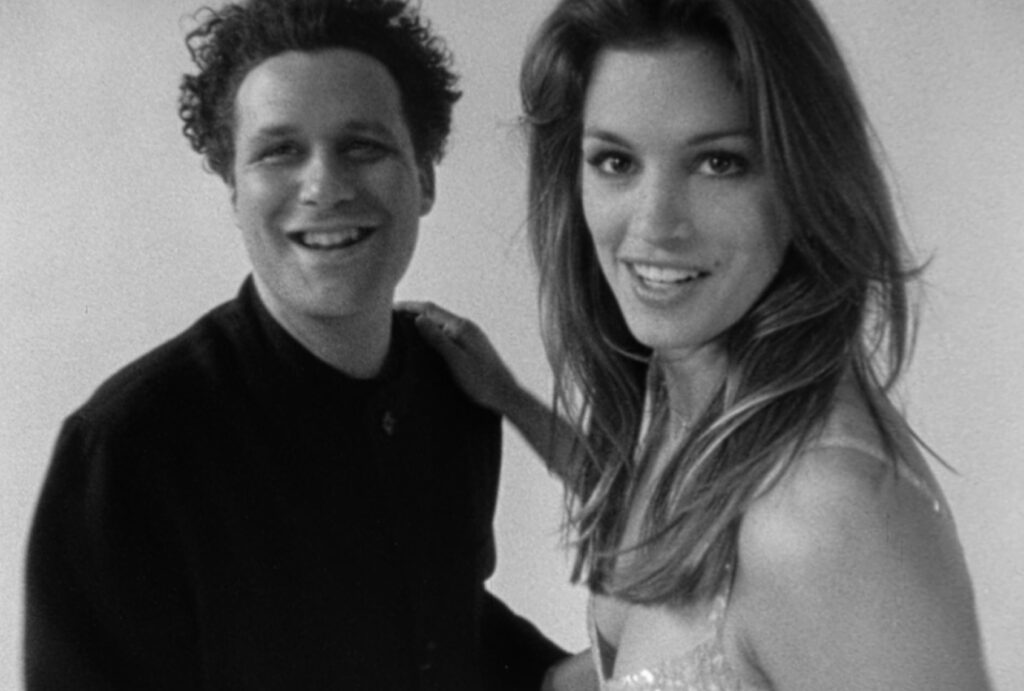
(Janus Films) Isaac Mizrahi and Cindy Crawford in “Unzipped”
A retrospective of Galliano’s work at the Met would have been a chance to do just that: to look at an important issue that spans art, fashion, culture, politics, morality, and humanity from an angle that allows one to consider how these facets intertwine. What’s even more frustrating is that, when it was first announced, the Met said the exhibition would address the derogatory conduct that fundamentally altered Galliano’s career and reception. In doing so, the exhibition would “consider how the artistic achievement should be understood alongside ethical accountability.” And while I understand not wanting to give fashion gatekeepers the benefit of the doubt, it’s positively stupefying to me that anyone could read that and think, “This is a huge mistake.” Not only would the exhibition be a once-in-a-lifetime chance to admire Galliano’s stunning accomplishments in the couture world, but it would also force people to have conversations about their opinions, rather than state opinions as fact.
Sure, if Galliano had simply faded into obscurity or dug his heels in on his horrible comments, this would be another conversation entirely. But not accounting for Galliano’s 15 years of sobriety, his frank apologies, and his continued remorse is somewhat unnerving. Is this how everything is going to be from now on: holding a person to their worst moments, no matter the public work they’ve done to grow? Or is it only after someone is dead that we can take a critical look at their life, eliminating the chance to keep the subject part of the conversation? How is anyone supposed to change; hell, how are we supposed to live?
To deprive oneself of this film because of Mizrahi’s views would be to deny utter exhilaration. Bad people can make very wonderful art. And enjoying that art doesn’t mean that those bad people are above criticism, or that the spectator has a moral failing of their own. This, of course, has its own nuances, but being a functional adult means learning to measure your own integrity.
Such obstinacy only serves to discourage personal improvement. Never mind that museums exist partially to spark these kinds of discussions. The answer is not to simply eliminate all works by controversial artists. If that were the case, there wouldn’t be any museums. But I get the feeling that this is, ever so secretly, what many people want: culture that reflects them and them only. What a dreadfully boring world.
The same logic applies to “Unzipped.” To deprive oneself of this film because of Mizrahi’s occasionally problematic language, or his unseemly request as the person in power that models dress behind a sheer scrim on stage, or even his recent and much more flagrant views of Israel, would be to deny utter exhilaration. Bad people can make very wonderful art. They’ve been doing it for centuries! And enjoying that art doesn’t mean that those bad people are above criticism, or that the spectator has a moral failing of their own. This, of course, has its own nuances — a case-by-case basis depending on the severity of the artist’s wrongdoings — but being a functional adult means learning to measure your own integrity.
As part of his statement regarding the exhibition’s cancellation, Galliano continued: “My gratitude to the Met, Max, Andrew and Anna remains profound and enduring. Their generosity, humanity and belief in the importance of fashion as art, culture and history, as well as their understanding of human fragility and the possibility of growth, will remain with me always.”
There’s that word again: fragile. Just as Bernhard sang it over the opening of “Unzipped,” the same song scores the beginning of Mizrahi’s triumphant Fall/Winter 1995 presentation. “You were so beautiful, you were so fragile, you were so real.” Then, a breathtaking runway show, filmed by Keeve in a manner as radical and resplendent as Mizrahi’s Inuit-inspired collection. The fragility that made Sylvester’s music so irresistible, the fragility that plagued Mizrahi at the start of the film, the fragility that thrust Galliano into his lowest point; they’re all the same fabric in different shades. Sewn together, they might look strange. But take a step back and consider the finished garment with the grace it deserves, and chances are, you’ll find something worth admiring.
Read more Maria Bartiromo’s Fox exit exposes breakdown of Trump’s media machine